

Clinical Takeaways
- The Definition: PGT-A stands for Preimplantation Genetic Testing for aneuploidy, or an abnormal number of chromosomes which contain our genes. It screens embryos to ensure they have the correct number of chromosomes (46).
- The Goal: To identify euploid or genetically normal embryos. These have the highest potential for implantation and the lowest risk of miscarriage.
- The Target Audience: Highly recommended for patients over 37, those with recurrent pregnancy loss, or couples with multiple failed IVF transfers.
- The Methodology: A biopsy of 8-10 cells is taken from the trophectoderm (future placenta) cells on Day 5 or 6, leaving the inner cell mass (the future fetus) untouched.
In the world of IVF, the most heartbreaking outcome may not necessarily be a negative pregnancy test — it could instead be a miscarriage. The physical and emotional toll of achieving a pregnancy only to lose it is profound.
Our doctors’ goal is to minimize that risk. We want to transfer an embryo that is not just "pretty" under a microscope, but genetically competent to become a healthy baby.
This is where PGT-A enters the conversation.
Often referred to in patient forums as the search for the "Golden Embryo," PGT-A allows us to look inside the genetic map of your embryo before we ever perform a transfer. It shifts the odds from "hope" to "data." Here is how it works, and how we decide if it is right for you.

The Science: Why Do Embryos Fail?
To understand PGT-A, we must understand aneuploidy.
A healthy human embryo has 46 chromosomes (23 from the egg, 23 from the sperm). We call this a euploid embryo.However, errors in cell division frequently occur. An embryo might end up with 45 or 47 chromosomes. We call this an aneuploid embryo.
The Clinical Reality:
- Aneuploid embryos almost never result in a healthy baby.
- They either fail to implant (negative test), result in a miscarriage (often before 10 weeks), or result in conditions like Down Syndrome (Trisomy 21).
- Crucially: Aneuploidy is primarily driven by egg age. At age 30, roughly 25% of embryos are aneuploid. By age 40, that number rises to roughly 60–70%.
The PGT-A Process: How We Test
Patients often fear that testing the embryo might harm it. It is important to understand that modern PGT-A is highly precise and minimally invasive to the fetus itself.
- Growth: We let the embryo grow in the lab until Day 5 or 6, when it becomes a blastocyst. At this stage, it has differentiated into two parts: the inner cell mass (future fetus) and the trophectoderm (future placenta).
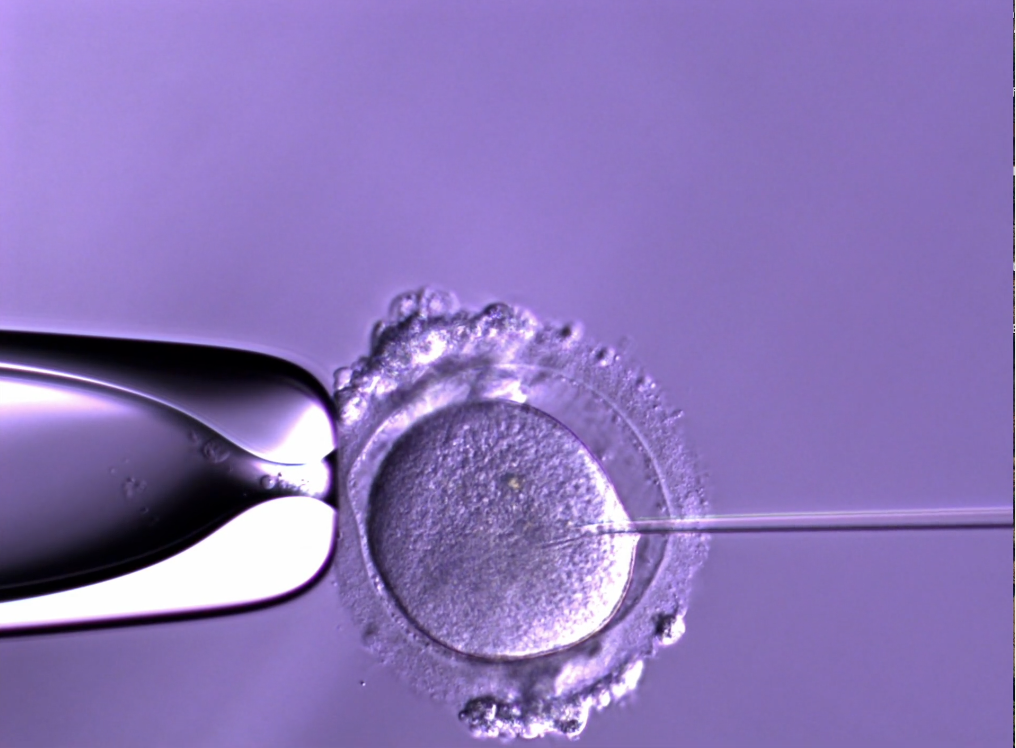
- Biopsy: Using a microscopic laser, our embryologists gently remove 8–10 cells from the trophectoderm (the outer layer).
- Safety: Because we do not touch the inner cell mass, the risk of damaging the future fetus is statistically negligible (less than 1% in skilled hands).
- Freezing: The embryo is safely frozen while the cell sample is sent to a genetics lab for analysis.
Decoding the Results: Euploid vs Aneuploid
When your report comes back, typically 10–14 days later, your embryos will be categorized into two buckets:
- Euploid (normal): Contains 46 chromosomes. This means this embryo will be a priority for transfer, and it will have a ~60–70% live birth rate per transfer.
- Aneuploid (abnormal): Missing or extra chromosomes (e.g., Trisomy 16). This means this embryo is not suitable for transfer. These are medically discarded as they would very likely result in failure or miscarriage.
Who Should Consider PGT-A?
In Portugal, we can legally only offer PGT-A testing to patients aged 37 and above, or patients who meet specific medical criteria, like previous failed cycles or recurrent pregnancy loss.
Your dedicated Ovom Care specialist can talk you through your options and whether PGT-A testing may be appropriate for you.
The Legal Landscape: Why Location Matters
One of the most confusing aspects of PGT-A for our patients is that your access to this technology depends entirely on the laws of the country where the lab is located. The regulatory landscape for "embryo testing" varies drastically across borders.
The Ovom Solution: Access via Portugal
Because Ovom operates clinics in Portugal (Lisbon), our patients are able to legally access PGT-A testing that might be restricted in their home countries.Portugal has one of the most progressive and well-regulated reproductive laws in Europe. Here, PGT-A is legal and widely practiced for medical indications, including advanced maternal age (37 and above), recurrent pregnancy loss, and repeated implantation failure.
We manage the cross-border journey seamlessly: you can have your initial consultations and monitoring in your home city (e.g., Berlin, London or Paris), and then travel to our Lisbon clinic specifically for the egg retrieval and fertilization, where PGT-A can be legally performed in our certified labs.

The "Ovom Difference": Combining AI with Genetics
Traditional clinics rely solely on PGT-A. At Ovom, we layer technologies.While PGT-A tells us if the "hardware" (chromosomes) is correct, our AI-imaging technology assesses the "software" (metabolic health and developmental timing).By combining PGT-A status with AI grading, we can rank your Euploid embryos to select the single one with the absolute highest probability of success.
FAQ: Common Questions on Genetic Testing
Does PGT-A improve success rates?
PGT-A does not increase the likelihood of live birth, but does decrease the risk of miscarriage.
What does this mean? If you have 5 embryos and all are abnormal, PGT-A cannot change that. But it does prevent you from going through 5 failed transfers, saving you months of heartache and thousands in transfer costs.
Can I choose the sex of my future baby with PGT-A?
Technically, PGT-A reveals the sex chromosomes (XX female or XY male). However, using this information for sex selection is illegal in the UK and most of the EU (including Germany and Portugal), unless there is a medical indication (e.g. genetic risk of sex-linked disease).
In the US, it is permitted, but there are many ethical considerations here, as most people choose XY embryos (male). Going down this path would cause an imbalance in our population and raises important questions about society’s regard for women and people assigned female at birth.
Is there a risk of a false positive?
No test is 100%. However, modern Next-Generation Sequencing (NGS) is over 98% accurate. All patients are recommended to have follow up prenatal testing during the pregnancy regardless of the PGT-A result.
The Next Step
Information is power. PGT-A offers a level of transparency that was impossible a generation ago. It allows us to minimize the "trial and error" of IVF and focus on the precise path to a healthy pregnancy.
Ready to look deeper? Book a Consultation to Discuss PGT-A.
.png)





.jpg)
.png)
%20(1).jpg)





%20(1).jpg)
.png)


