

.png)
Clinical Takeaways
- The Definition: ROPA (Reception of Oocytes from Partner), or Reciprocal IVF, allows couples to share the biological roles: one partner provides the eggs (genetics), and the other carries the pregnancy (gestation).
- Who It’s For: Lesbian couples, trans men, non-binary people, and gender-diverse partners with ovaries/uteri (plural of uterus) who wish to share a biological connection to their child.
- The Legal Reality: ROPA is currently not permitted in Germany due to the Embryo Protection Act, but it is fully legal in Portugal. Ovom facilitates seamless cross-border care for German, French, Italian, Greek and many more residents where it is not permitted in their home countries.
- The Epigenetic Bond: While the gestational parent may not provide the nuclear DNA material where your chormosomes are, they influence gene expression (epigenetics) through the uterine environment, creating a distinct biological tie.
ROPA: Your Path to Shared Parenthood
In reproductive medicine, we often talk about "getting pregnant." But for many of my LGBTQIA+ patients, it is about building a family structure that physically reflects their partnership.
Traditionally, queer family building relied on IUI (Intrauterine Insemination) or standard IVF, where one partner undertook the entire medical burden. While valid, this often leaves couples feeling like the process is "lopsided" or biologically separated.
ROPA (Reciprocal IVF) changes this paradigm. It transforms family building from an individual to the the couple.
At Ovom, we see ROPA not just as a another procedure, but as a profound method of inclusion. Whether you identify as a lesbian couple, trans, non-binary, or gender-diverse, here is the clinical and legal reality of how we make shared parenthood possible.
What is the ROPA Method?
In a standard IVF cycle, the autologous (the eggs come from the same) person provides the eggs and carries the pregnancy. In a ROPA cycle, we separate these roles, allowing both partners to participate.
The Two Distinct Roles:
- Partner A (Genetic Parent): The partner providing the oocytes (eggs). This partner undergoes ovarian stimulation (approximately 10-12 days) and the egg retrieval procedure.
- Partner B (Gestational Parent): The partner carrying the pregnancy. This partner undergoes uterine preparation (estrogen/progesterone) to thicken the lining of the uterus, followed by the embryo transfer procedure.
This method is particularly powerful for trans men or non-binary individuals who may wish to contribute genetically to their future child but for whom carrying a pregnancy would induce significant gender dysphoria. ROPA allows them to be the genetic parent without the psychological or physical experience of gestation.
The Step-by-Step Clinical Protocol
While the timeline mirrors standard IVF, the typical logistics require precise synchronization. The path may be varied based on the needs and desires of the couple.
Note that the following would not exactly be the process for those also doing PGT-A or PGT-M genetic testing.
Phase 1: Synchronization
We coordinate the cycles of both partners (if applicable). This allows us to retrieve eggs from the genetic parent and transfer them to the gestational parent.
Phase 2: Stimulation (The Genetic Parent)
Partner A begins daily hormone injections to recruit multiple follicles. We monitor this closely with ultrasound and blood work to ensure safety and maximize egg yield.
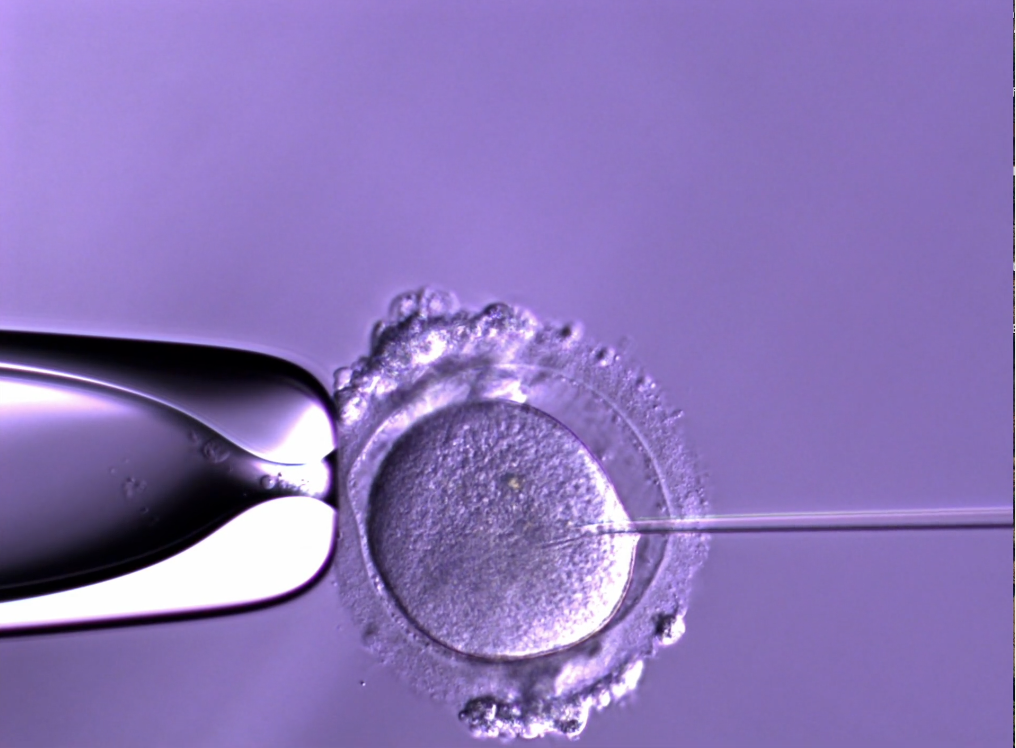
Phase 3: Fertilization & Embryology
The retrieved eggs are fertilized with donor sperm.
The Ovom Difference: We apply the same AI-enhanced embryo selection technology to ROPA cycles as we do for all patients. We do not just look for an embryo; we look for the competent embryo with the highest probability of live birth.
Phase 4: Transfer (The Gestational Parent)Once the embryo reaches the blastocyst stage (Day 5), it is transferred into Partner B’s uterus.
.jpg)
Navigating the Legal Landscape: Germany vs. Europe
This is the most frequent logistical question we receive. The availability of ROPA depends entirely on jurisdiction.
- In Germany, Italy, Greece and France: Currently, ROPA is not legal. These countries are only a handful of nations whose laws prohibit egg donation, same-sex parenting or both.
- In Portugal: ROPA is fully legal, regulated, and widely practiced for all eligible couples.
The Ovom Solution
Because Ovom operates a pan-European network, we can legally bridge this gap. With us, you can start your journey and initial diagnostic testing and cycle planning from home — wherever that is for you — and then coordinate your travel to our Cascais clinic near Lisbon (Portugal) clinic for the actual retrieval and transfer.
We assist you with concierge level "cross-border" logistics to ensure your care is continuous, safe, and legally compliant.
The "Epigenetics" Question: Will the Baby Be 'Mine'?
A common, deeply emotional fear for the gestational parent is: "If I don't provide the egg, am I just an incubator?"
The scientific answer is a definitive no.
While the genetic parent provides the DNA blueprint, the gestational parent provides the instruction manual for how that blueprint is read. This is called epigenetics. It is that age old debate of nature vs nurture which both influence and shape the development of a baby.
- The Science: Your hormones, nutrition, and metabolic environment could directly influence which genes in the baby are switched "on" or "off." We don't yet have strong data to support this.
- The Reality: You are not just carrying the child; you are biologically shaping their development.
Sperm Donation: The Third Piece
ROPA requires donor sperm. At Ovom, we guide you through two main categories:
- ID-Release (Open): The child can contact the donor upon turning 18. This is mandatory in Portugal.
- Anonymous: Available in some jurisdictions, though the global trend is moving toward openness to support the child's future identity.
FAQ: Common Questions on Reciprocal IVF
Is ROPA more expensive than standard IVF?
Yes, moderately. Because we are medically treating two patients simultaneously (one for retrieval, one for transfer), there are additional costs for donor sperm, medication and monitoring. However, it is not "double" the price; it is typically priced as an IVF cycle plus a coordination fee for the second partner.
See our full pricing page here: https://www.ovomcare-pricing.com/
Can we do "Double ROPA"?
Yes. Some couples choose to do two cycles: in Cycle 1, Partner A provides eggs for Partner B to carry. In Cycle 2, they swap roles. This allows both partners to have a genetic child within the same family unit.
Do we both need to take hormones?
Yes. Partner A (Genetic) takes stimulation hormones stimulate the ovaries to retrieve multiple eggs. Partner B (Gestational) takes estrogen and progesterone to prepare the endometrium or lining of the uterus.
Important to note: We encourage our ROPA patients to purchase two or more vials of sperm because families often want the children to be biological siblings and there is no guarantee a specific donor's vials will be present at a later date.
The Ovom Promise
We believe family is defined by love, not just lineage. Whether you are in Berlin, Lisbon, Paris or London or anywhere else in this world, our team is dedicated to helping you navigate the medical, legal, and emotional landscape of shared parenthood.
Ready to explore your options? Book a ROPA Consultation with our expert team.






.jpg)
%20(1).jpg)





%20(1).jpg)
.png)


