



Clinical Takeaways
- The Definition: Egg Freezing (oocyte cryopreservation) is the process of retrieving unfertilized eggs and freezing them to pause their biological aging.
- The Ideal Age: While there is no single "perfect" age, clinical data suggests the optimal window for cost-efficiency and live birth is less than 35 (Nagy et al 2017) or less than 38 years old (Doyle et al 2016). However, since the ovary is the first organ to age and the rate of aging varies among indviduals, the ideal age is right now.
- The Goal: It is not just about "insurance"; it is about reproductive autonomy. It allows you to synchronize your biological timeline with your life timeline. Take your freedom back into your hands.
Egg Freezing: Your New Plan A
Popular discourse and the media often sees patients describe egg freezing as a "backup plan." At Ovom, we challenge that framing.
The two most disruptive innovations in women’s health were the development of the birth control pill and in vitro fertilization (IVF). Both advances have empowered women to exercise self-agency over their reproductive lives.
Egg freezing is not Plan B; for many modern women, it is Plan A. It is a proactive family planning strategy that allows you to separate your reproduction not only from your chronological age, but also from other key elements in one’s life such as your career, and an ideal partner.
If you are preparing for gender-affirming treatments or surgery or have a diagnosis of cancer or other medical conditions, egg freezing can offer you something remarkably profound: time and choice.
We combine cutting-edge cryobiology with AI-enhanced quality assesment called Ovom Egg Intelligence to maximize the potential of every egg we retrieve.
Before we discuss the technology, let’s demystify the journey. Here is the comprehensive medical guide to freezing your eggs.
Who is Egg Freezing For?
While often marketed to single women in their 30s, the medical indications are actually much broader:
- Elective freezers: Individuals who wish to delay childbearing for personal or professional reasons.
- Trans men and trans-feminine individuals, non-binary & gender-diverse people: For people with ovaries, freezing before starting testosterone (HRT) ensures genetic parenthood is an option in the future.
- Cancer / oncology Patients: Freezing before chemotherapy or radiation that might impact fertility.
The Science: Why Freeze?
Biological females or people Assigned Female at Birth (46, XX chromosomes) are born with all the eggs they will ever have in their ovaries. This is called your ovarian reserve. The ovary is the fastest aging organ in female body.
As your ovaries age, two things happen:
- Quantity Decreases: The ovarian reserve drops naturally.
- Quality Decreases: This is the silent factor. The mitochondria (the powerhouse of the cell) in the eggs have worsening function over time. This leads to the egg not being able to do its two jobs properly — mature (have the correct chromosomal makeup), and become fertilized by sperm.
The Strategy: By freezing an egg at age 30, you lock in that egg's "biological age." If you come back to use it at age 40, the egg still behaves like it is 30 — with the higher success rates associated with that younger age.
The 4-Step Process: Timeline & Experience
A typical cycle takes approximately 12–14 days. It is not a months-long ordeal.
Stage 1: Assessment (Day 0)
As the first stage, we check your AMH levels (Anti-Müllerian Hormone) and do an Antral Dollicle Count (AFC) ultrasound to predict how many eggs we will likely be able to collect.
Stage 2: Stimulation (Days 1 - 10)
Next, you will take daily hormone injections (gonadotropins) to encourage the ovaries to mature multiple eggs instead of just one.
This is the same as the stimulation phase undertaken in a typical IVF cycle.
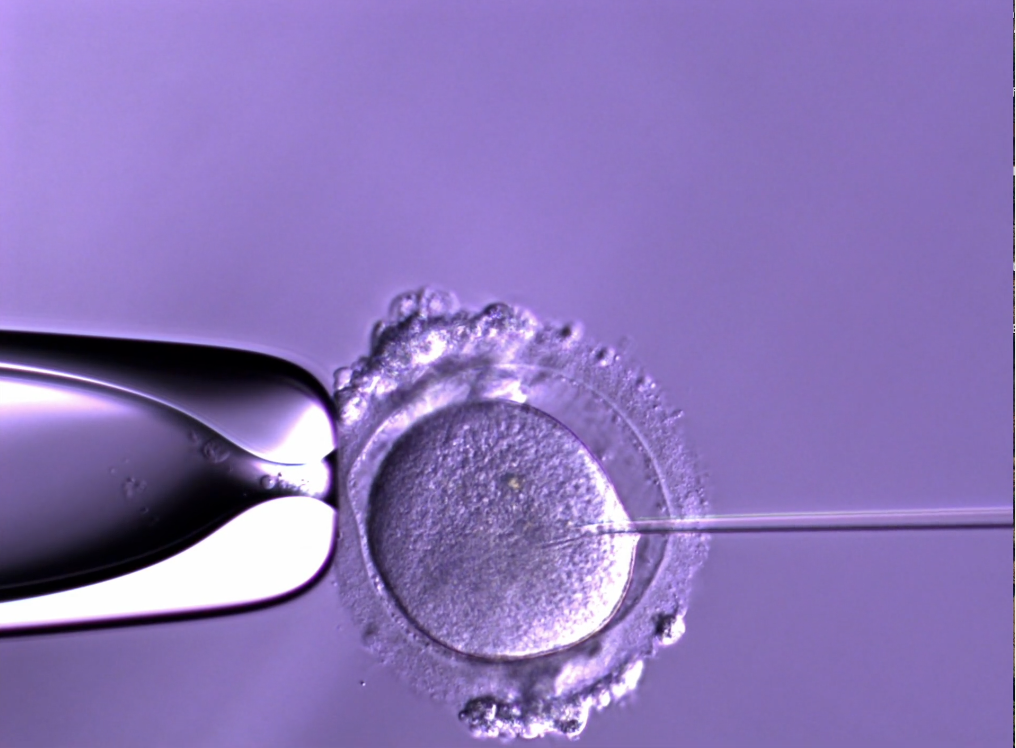
Stage 3: Egg Collection / Retrieval (Days 11 - 13)
A 15-minute procedure under mild sedation to collect the eggs. No cuts, no stitches.
Stage 4: Vitrification (Days 11-13)
The mature eggs are vitrified in the lab immediately after retrieval.
Vitrification refers to a super-fast "flash-freezing" process that turns the water inside eggs into a solid, glass-like state, preventing damaging ice crystals from forming, allowing for much higher egg survival rates and better long-term fertility preservation than slow-freezing. This technique uses special cryoprotectants and liquid nitrogen to cool eggs to -196°C almost instantly, preserving their quality for future IVF.
.png)
The Details of your Egg Collection
The Egg Collection, or Egg Retrieval, is a minor surgical procedure performed under sedation. It takes about 20-60 minutes. Using ultrasound guidance, your doctor will gently aspirate the fluid from the follicles to collect the eggs.
Your egg collection will generally occur 36 to 37 hours after you have taken your trigger injection.
Guidance for your Egg Collection:
- Please arrive on time for your Egg Collection appointment with your partner, support person or co-parent. You must arrive 60 minutes before your procedure begins. A delay caused by lateness could jeopardize your cycle.
- You must attend with no make-up, no nail polish, no jewelry or piercings, and no perfume.
- As your Egg Collection will be performed under sedation, you must fast from midnight the night before the procedure.
- The procedure takes approximately 20-60 minutes to complete, depending on your response during the stimulation process.
- You will be monitored for approximately 1 hour following the procedure and informed of any continuing medications.
Recovery after your Egg Collection:
Most patients go home an hour or two later, and can travel or return to work the next day.
Here are some symptoms that you may experience following your Egg Collection:
- Vaginal spotting: Due to the nature of the procedure, some vaginal bleeding is normal on the day of the procedure. This can last for several days, but should not increase in volumeuntil around 7-10 days when you will experience your period. Please wear a sanitary towel or pad and monitor your blood loss. If you have any concerns, please contact your care team immediately.
- Period-like pains: You can take regular paracetamol to manage your abdominalpain. You can also use a hot bag/hot water bottle and we advise you take it easy until these pains ease.
- Drowsiness/brain fog: Drowsiness can be experienced for up to 24 hours following yourprocedure due to the anesthetic medications. Please ensure you keep somebody with youduring this 24-hour period and avoid cooking, operating heavy machinery, driving and signinglegal documents. Most people nap when at home.
- Mild bloating: You may experience bloating following your procedure. Ginger tea and a nutritious, balanced diet can help. This bloating should be mild and not impact your breathing or ability to move around. If you have any concerns, please contact your care team immediately.
- Mild nausea: This can be due to the anesthetic or antibiotics provided on the day of theprocedure. It is best to take regular sips of water and try home remedies, such as ginger tea, to ease this.
If you have any concerns about your symptoms following your Egg Collection, please contact your care team immediately.
The Numbers: How Many Eggs Do I Need?
This is the "Golden Question." The answer depends entirely on your age at the time of freezing and the desired number of children you want.
At Ovom, we use AI to give you a personalized forecast based on your specific hormone profile.
The Ovom Difference: "Smart" Freezing
We don’t just freeze; we analyze.
Most clinics count your eggs and freeze them blindly. You only go on to find out the quality of your eggs when you want to use them. Unlike the status quo, Ovom utilizes AI-computer vision technology to assess the quality of your eggs before they are frozen.
- Why this matters: You shouldn't have to guess if your frozen eggs are viable. We aim to provide a realistic, data-backed prediction of your future success, so you can make an informed decision about a future cycle.
%20(1).jpg)
FAQ: Answering Your Top Questions
How long can eggs stay frozen?
Biologically, indefinitely. Whether they are frozen for 1 year or 10 years, the success rates remain the same. The "clock" stops the moment they are vitrified.
What is the cost of egg freezing?
Costs vary by clinic location (New York City vs. Lisbon), but generally include:
- Cycle Fee: The medical procedure and lab work.
- Medication: Paid to the pharmacy (varies by dosage).
- Storage: An annual fee to keep the eggs frozen.
At Ovom, we offer transparent packages and financing options. See our full pricing page for Egg Freezing here: https://www.ovomcare-pricing.com/
Is egg freezing guaranteed?
No medical procedure is 100% guaranteed. However, freezing eggs under age 35 significantly improves your statistical odds compared to trying to conceive naturally in your 40s.
Will the hormones make me gain weight?
The answer is generally no, not permanently. During the 10–12 days of stimulation, your ovaries grow significantly, which causes fluid retention and bloating. You might see the scale go up by 1–2 kg, but this is water weight, not fat. It typically resolves within 7–10 days after the retrieval once your hormone levels drop.
Do frozen eggs work as well as "fresh" eggs?
When comparing vitrified eggs to fresh eggs with IVF the live births were similar among age-matched controls (Cascante et al., 2022).
Do I need to stop taking Birth Control?
It depends on the type. Your doctor can talk you through your options in your Initial Medical Consultation with us.
For Intrauterine Devices (IUDs): You can keep your IUD in during the entire process. Bonus is that we can show you its placement when you have ultrasounds. IUDs don’t impact response to stimulation.
What happens if I get pregnant naturally and never use them?
This is actually the "best-case scenario"—it means you have achieved your family goals without needing medical intervention!If you have unused eggs, you have three options (depending on local laws):
- Discard them (if your family is complete).
- Donate them to science (for research).
- Donate them to another patient (giving the gift of family to someone else).
- Designate them in case you have secondary infertility (this means you can conceive and have a baby once, but then cannot again later on).
Can I have sex during the process?
The short answer is yes — but, as your ovaries get more stimulated, you may not feel like it. However there are some precautions to remember.
- Risk of Pregnancy: You are super-fertile during this time and you could therefore unintentionally conceive. Barrier contraceptive such as condoms will protect you from becoming Octomom.
- Ovarian Torsion: Your ovaries are enlarged and heavy. Vigorous activity, including acrobatic sex, could cause an ovary to twist, which is a surgical emergency. Take it easy.
The Next Step
Your fertility is precious and limited resource, but at Ovom Care, we can help you plan your family for the future. Whether you are ready to start or just want to know your numbers, the first step is a diagnostic assessment.
Secure your options for tomorrow, today. Book your Fertility Assessment.

Footnotes:
1. Nagy ZP, Anderson RE, Feinberg EC, Hayward B, Mahony MC. The Human Oocyte Preservation Experience (HOPE) Registry: evaluation of cryopreservation techniques and oocyte source on outcomes. Reprod Biol Endocrinol 2017;15:10.
2. Doyle JO, Richter KS, Lim J, Stillman RJ, Graham JR, Tucker MJ. Successful elective and medically indicated oocyte vitrification and warming for autologous in vitro fertilization, with predicted birth probabilities for fertility preservation according to number of cryopreserved oocytes and age at retrieval. Fertil Steril 2016;105:459–66.e2.
- Cascante, S.D., Blakemore, J.K., DeVore, S. Fifteen years of autologous oocyte thaw outcomes from a large university-based fertility center. Fertil. Steril. 2022; 118:158-166.





.jpg)
.png)
%20(1).jpg)




%20(1).jpg)
.png)


