
%20(1).jpg)
Clinical Takeaways
- The Definition: IVF (In Vitro Fertilization) is the process of fertilizing eggs with sperm outside the body in a controlled laboratory environment.
- The Timeline: A single cycle typically requires 3 to 4 weeks from the start of medication to the embryo transfer.
- Success Factors: Age is the primary variable, but technology (like AI selection and genetic testing) can significantly improve outcomes per transfer.
- Pain Level: Most patients report minimal discomfort; egg retrieval is performed under sedation, and the transfer feels similar to a pap smear.
If you are reading this, you are likely standing at a crossroad. For many of our patients, In Vitro Fertilization (IVF) represents both a solution to the problem of getting pregnant but also an unknown that raises many questions.
There is tons of information online from blogs, TikToks to Reddit pages, but much of it lacks accurate medical information. As a physician, my goal is to replace misinformation and anxiety-provoking “fake news” with clear, personalized information that helps you make an informed decision about your fertility. IVF is not magic; rather, it is a medical process designed to overcome many biological barriers to conception.
At Ovom, we combine this established science with next-generation technology, specifically AI-assisted embryo selection, to optimize your results. But before we discuss the technology, it is vital to understand this journey to parenthood itself.
Here is the step-by-step medical reality of an IVF cycle.
What is IVF?
In Vitro Fertilization (IVF) is a procedure where eggs are collected from the ovarian follicles and fertilized by sperm in a specialized laboratory called an embryology library.
Generally the purpose of the medications of an IVF cycle is to stimulate or rescue the cohort or group of follicles, the fluid sacs that the eggs develop in, so that instead of having one dominant follicle all follicles develop and yield multiple follicles. Fun fact term "in vitro" literally means "in glass," referring to the petri dishes used in the early days of the science.
Today, the process happens in highly controlled incubators that mimic the environment of the fallopian tube where fertilization occurs naturally. Once the eggs are fertilized by sperm, the resulting embryo or embryos are monitored for growth in preparation for a transfer to the uterus to start a pregnancy or become biopsied to test the embryo for abnormalities.
Who is IVF Recommended For?
IVF is the gold standard treatment for various fertility challenges, including, but not limited to:
- Tubal Factor Infertility: Blocked, damaged or absent fallopian tubes caused tubal ligation or tied tubes, tubal surgery, ectopics or previous infections with Chlamydia
- Male Factor Infertility: Sperm abnormalities that impact the movement, shape or concentration of the sperm
- Endometriosis: The lining of the uterus called the endometrium grows in places it shouldn’t, causing inflammation and scar tissue that can negatively impact the ovaries and egg quality
- Unexplained Infertility: When fertility tests are normal but conception does not occur
- LGBTQIA+ Family Building: For same-sex female couples, gender diverse people and trans men — either via individual IVF or Reciprocal IVF
- People who carry genetic mutations like BRCA1 or Sickle Cell Trait: with IVF we can select embryos who are not carriers of the mutations to prevent hereditary conditions
- Alternative treatment for people trying to conceive (TTC) who have not been able to conceive with ovulation induction medications
- Age-related fertility decline: As our age increases, our chances of conceiving declines and the risk for miscarriages increases
- People who previously underwent fertility preservation: Eggs that have previously been frozen will need to be thawed and fertilized with sperm in a process called intracytoplasmic sperm injection (ICSI)
The Stages of the IVF Timeline
A typical IVF cycle takes about 3 to 4 weeks from the start of stimulation to the embryo transfer. Here is the breakdown:
Stage 1: Cycle Prep - The Consultation
You will start your journey in our patient app and online with a virtual consultation with one of our specialist doctors — or if you so desire, with an in-person visit at our clinic. At Ovom, we have you do a consultation because we would like to get to know your unique circumstances and background, for improved personalization and for your safety.
In order to get ready for either type of appointment, please do the following:
- Download our patient app from the App Store (Apple or Android), and onboard with all your demographic information including your date of birth, address and upload your passport or national ID card. This information will help us identify you throughout your treatment journey. We need to check your ID at every face to face interaction because we store precious embryos, eggs and sperm at our clinics.
- If you have previous records such as diagnostic blood test results, consultation notes or past IVF results, please upload these to the patient app at least 24 hours before your scheduled appointment, so that your doctor can review your records ahead of your consultation.

Stage 1: Cycle Prep - The Diagnostics
Next, you will complete diagnostic testing so that your doctor can create your personalized treatment plan for you.
At Ovom Care, the diagnostics tests you will complete are:
Diagnostics for women and people with ovaries
A blood test called Anti-Mullerian Hormone, which is a marker of ovarian reserve or your follicular pool — meaning the unique cluster of cells, called follicles, in the ovary where the eggs mature.
Notice that I said ‘where the eggs mature’ — not ‘made’. Women make all the eggs they will produce before they are born and then lose them over time in a process called atresia, or programmed cell death. So, AMH is more of a snapshot at a point in time, not an enduring marker of ovarian reserve.
Alongside the AMH blood test, we conduct a specialized ultrasound of your ovaries called the Antral Follicle Count, or AFC. This counts mature follicles, the specialized cluster of cells that now mature and become a sac visible on ultrasound, and will help us predict how your ovaries will respond to treatment (also known as ‘stimulation’).
At the same time as the AFC ultrasound, we will also do a 3D ultrasound of your uterus, if you have one, to check for any structural conditions that can interfere with your treatment or future conception.
Diagnostics for trans men, non-binary and gender diverse people with ovaries
For trans men and non-binary people who would like to freeze their eggs, we typically do a blood test called Anti-Mullerian Hormone. This is a marker of ovarian reserve or your follicular pool, meaning the unique cluster of cells, called follicles, in the ovary where the eggs mature.
Notice, that I said the eggs mature and not made. People with ovaries make all the eggs they will produce before they are born, and then lose them over time in a process called atresia or programmed cell death. So, AMH is more of a snapshot at a point in time, not an enduring marker of ovarian reserve. Nor is it a test of whether you can become pregnant.
Diagnostics if you have a male partner or co-parent who produces sperm
We will also perform a semen analysis to determine the count, morphology (shape) and motility (movement) of the sperm. The male partner will need to abstain or not ejaculate for for 2-5 days prior the semen analysis.
Diagnostics for everyone
Prior to starting treatment, you will need to have prenatal labs such as HIV, Hep B, C, Syphilis and TSH. If you have any medical conditions, you will need to have them optimized as well.

Stage 1: Cycle Prep - The Follow Up and Nurse Consultation
Once you have completed your diagnostic tests, you will have a follow-up appointment online via the Ovom App to discuss your treatment plan with your clinician.
At Ovom Care, we partner with you to review all of your diagnostic results and treatment options, so that we can facilitate the best treatment plan tailored to your needs and wishes.
Please note that, as we tailor your treatment plan according to your diagnostics and diagnoses, no two treatment plans will be exactly the same. This means your plan is tailored to your unique biology and diagnostic data — personalized for you, to maximize your chances of success.
Our goal is to counsel you about the pros and cons of each part of your treatment to make sure you are informed and prepared. Once you have reviewed consents for the treatment, you will then have a Nurse Consultation.
The purpose of the Nurse Consultation is to review your treatment plan and give you a calendar of when and how to take your medications. The Ovom App will have medication reminders for you and we strongly encourage you to log when you have taken your medication.
Stage 2: Ovarian Stimulation - 10 to 14 days
In a natural cycle, your body typically matures just one egg. To maximize success rates with IVF, you will take daily hormone injections — specifically, gonadotripins. These are hormones your body already naturally makes. Taking a higher dose via injections helps us each and every follicle and increase the number of eggs we collect, and therefore the number of embryos we make.
The Protocol
You will administer daily hormone injections (gonadotropins) to stimulate your ovaries to support multiple follicles (the fluid-filled sacs that contain eggs).
It can seem a little daunting to have to prepare medications and give yourself injections for the first time, but rest assured, you’ll be a pro by the end. Your care team at Ovom Care will be there to guide and support you every step of the way and we have detailed instructions available 24/7 in the Ovom App.
Monitoring
During this time, you will undertake ultrasounds and blood tests so we can monitor follicle growth and prevent ovarian hyperstimulation. You can do this either at our Ovom Clinic in Cascais, Portugal, or from our partner clinics in your home city. No need to travel.
Your Treatment Calendar
You will get a personalized treatment overview calendar in the Ovom App with key dates of your treatment cycle. These dates may be subject to change depending on your response to treatment.
You will likely come in for monitoring 1 to 2 times in the first week of stimulation, and another 2 to 3 times in the second week of stimulation. Exact timing and the number of monitoring scans and blood tests will depend on your response to medication, and your medication adherence.
Be sure to check your Ovom App for updates and feedback from the Ovom Care team, as we will often alter your treatment plan based on your response.
Trigger Injection
Once your stimulation is complete, you will be “triggered” with an injection to mature the eggs in preparation for egg collection. This is a very important step that, if omitted, could compromise the entire cycle.
Please review the instructions from your Ovom Care nursing team and in the Ovom App, and watch the relevant instructional videos, before you administer your trigger injection.
Be sure to take your trigger injection on time, as directed by your nursing team, as the injection must generally be done 36 to 37 hours prior to your egg collection.
Please send your Ovom Care nursing team via the Ovom App when you have completed your trigger injection, so we can note the time for your treatment records.

Stage 3: Egg Collection (Day 13–15)
The Egg Collection, or Egg Retrieval, is a minor surgical procedure performed under sedation. It takes about 20-60 minutes. Using ultrasound guidance, your doctor will gently aspirate the fluid from the follicles to collect the eggs.
Your egg collection will generally occur 36 to 37 hours after you have taken your trigger injection.
Guidance for your Egg Collection
- Please arrive on time for your Egg Collection appointment with your partner, support person or co-parent. You must arrive 60 minutes before your procedure begins. A delay caused by lateness could jeopardize your cycle.
- You must attend with no make-up, no nail polish, no jewelry or piercings, and no perfume.
- As your Egg Collection will be performed under sedation, you must fast from midnight the night before the procedure.
- The procedure takes approximately 20-60 minutes to complete, depending on your response during the stimulation process.
- You will be monitored for approximately 1 hour following the procedure and informed of any continuing medications.
Recovery after your Egg Collection
Most patients go home an hour or two later, and can travel or return to work the next day.
Here are some symptoms that you may experience following your Egg Collection:
- Vaginal spotting: Due to the nature of the procedure, some vaginal bleeding is normal on the day of the procedure. This can last for several days, but should not increase in volumeuntil around 7-10 days when you will experience your period. Please wear a sanitary towel or pad and monitor your blood loss. If you have any concerns, please contact your care team immediately.
- Period-like pains: You can take regular paracetamol to manage your abdominalpain. You can also use a hot bag/hot water bottle and we advise you take it easy until these pains ease.
- Drowsiness/brain fog: Drowsiness can be experienced for up to 24 hours following yourprocedure due to the anesthetic medications. Please ensure you keep somebody with youduring this 24-hour period and avoid cooking, operating heavy machinery, driving and signinglegal documents. Most people nap when at home.
- Mild bloating: You may experience bloating following your procedure. Ginger tea and a nutritious, balanced diet can help. This bloating should be mild and not impact your breathing or ability to move around. If you have any concerns, please contact your care team immediately.
- Mild nausea: This can be due to the anesthetic or antibiotics provided on the day of theprocedure. It is best to take regular sips of water and try home remedies, such as ginger tea, to ease this.
If you have any concerns about your symptoms following your Egg Collection, please contact your care team immediately.
Stage 4: Fertilization (Day 15)
This is where our lab takes over. On the same day as retrieval, the eggs are fertilized using sperm from your partner or a sperm donor.
We use one of two methods:
- Conventional IVF: Sperm is placed in a dish with the egg, allowing natural fertilization.
- ICSI (Intracytoplasmic Sperm Injection): A single, healthy sperm is injected directly into the egg. This is standard for male factor infertility or when using frozen eggs.
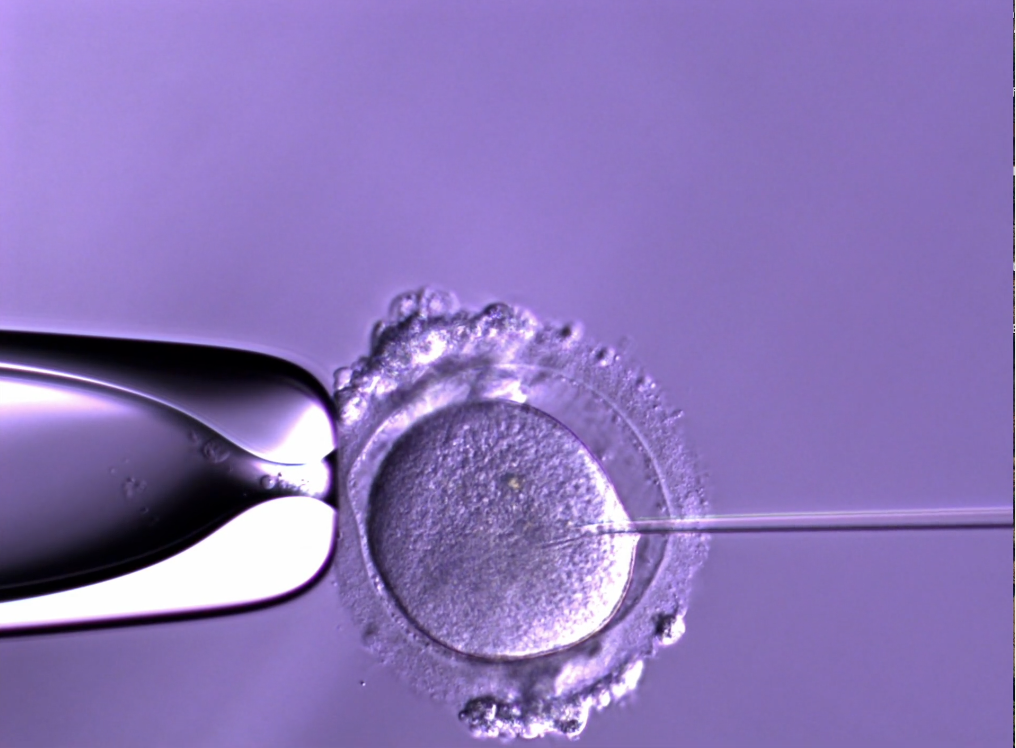
Stage 5: Embryo Culture & AI Grading (Days 16–20)
This is the “waiting stage” for patients, but the most critical time for our embryologists. We grow the embryos in the lab for 5 to 6 days until they reach the blastocyst stage.
The Ovom Difference: AI Embryo Grading
At Ovom, we utilize AI-powered imaging to analyze embryo development patterns invisible to the human eye. This helps us rank embryos based on their potential to result in a pregnancy, prioritizing the best one for transfer.
Stage 6: Embryo Transfer (Day 20+)
The final step is the Embryo Transfer, where we place the embryo into the uterus. This is a big step on the pathway to becoming a parent!
- The Procedure: This feels similar to a pap smear. Guided by an ultrasound, a thin catheter is guided through the cervix, and the embryo is placed inside the uterus where it will hopefully implant in the endometrium.
- You will have the transfer on Day 5 following your Egg Collection, if you are having a fresh embryo transfer (i.e. if you are not freezing all the embryos). The procedure takes approximately 15-30 minutes.
- No anesthesia is required and you will usually be awake for this procedure.
- Pregnancy Test: About 10–14 days after the transfer, you will take a beta-hCG blood test to confirm pregnancy.
What to expect from your Embryo Transfer:
Before your Embryo Transfer, your Ovom Care nursing team will give you detailed instructions on what to do in the days in the days leading up to your appointment. This will generally include the following:
- You will start progesterone medication the evening before your Egg Collection to prepare for a fresh embryo transfer.
- You will be required to have a full bladder for the procedure — we recommend drinking 1 liter of water an hour before, and not going to the toilet until after the procedure is over. A full bladder makes it easier for your doctor to perform the embryo transfer.
Recovery after your Embryo Transfer:
As you will be awake for this procedure, most patients go home an hour or two later, and can travel later that day and return to work the next day.
Here are some symptoms that you may experience following your Egg Collection:
- Vaginal spotting: Small amounts of blood loss on wiping can be normal during the two-week wait for your pregnancy test results. This can be accompanied by an increase in vaginal discharge. If you experience active, fresh red blood loss, please immediately inform a member of your care team.
- Period-like pains: Abdominal and back pain can be normal following your embryotransfer. We advise that you take regular paracetamol to manage your abdominal pain. Please avoid ibuprofen and avoid using a heat pack/hot water bottle to manage this discomfort.
- Mild bloating: Bloating can be experienced following your procedure, and ginger tea and a nutritious and balanced diet can help manage this. Bloating should be mild and not impact your breathing or ability to move around.
- General hormonal symptoms: PMS-like symptoms can be common in the two-week wait for your pregnancy test, likely due to the higher levels of progesterone that your body is currently experiencing. Please take it easy and do your best to reduce mental and physical stress during this period.
- Constipation: It is common to experience constipation, due to higher progesterone levels. You can increase your intake of water and fibre in your diet to help, and can consider using a mild laxative, following your care team’s advice.
If you have any concerns about your symptoms following your Egg Collection, please contact your care team immediately.
Understanding Success Rates
It is important to have realistic expectations. IVF success is heavily influenced by the age of the egg provider.
- Under 35: Success rates are generally highest, often exceeding 50% per transfer with a high-quality blastocyst.
- Age 35–40: Success rates gradually decline as egg quality changes.
- Over 40: While lower, success is still possible, especially when utilizing PGT-A (genetic testing) to ensure chromosomal normality.
Note: Every patient is unique. During your consultation, we will review your AMH levels and history to give you a personalized prognosis.
.png)
Frequently Asked Questions (FAQ)
Does IVF hurt?
Most patients describe the trigger injections as feeling like a pinch, and the egg retrieval is undertaken under light sedation, so you won’t feel anything. Afterwards, you may experience mild cramping.
The emotional side is often more challenging than the physical, which is why we prioritize mental health support at Ovom Care. We recommend taking it easy and doing what you can to reduce mental and physical stress during your IVF cycle.
What is the difference between IVF and IUI?
IUI (Intrauterine Insemination) places sperm inside the uterus, but fertilization happens naturally.
IVF involves fertilizing the egg outside the body. IVF generally has higher success rates per cycle than IUI.
What is the difference between IVF and ICSI?
In conventional IVF (In-Vitro Fertilization), sperm is placed in a dish with the egg, allowing natural fertilization.
In ICSI (Intracytoplasmic Sperm Injection), a single, healthy sperm is injected directly into the egg. This is standard for male factor infertility or when using frozen eggs.
How long will my entire IVF cycle take?
A typical IVF cycle takes about 3 to 4 weeks from the start of stimulation to the embryo transfer.
However, you will also need to account for the time needed to complete the diagnostic blood tests and ultrasound results that your doctor needs to create your personalized treatment plan. If you already have your results ready, that’s great! If not, please account for an extra 2 to 8 weeks, depending on how quickly you can get your testing done. This will also depend on the timing of your menstrual cycle.
With Ovom Care, how long do I need to spend in Portugal for treatment?
You only need to travel to our beautiful clinic in Cascais, Portugal (~1 hour drive from Lisbon) for your Egg Collection and Embryo Transfer — so, for between 5 to 8 days, depending on the timing of your cycle and your personal response to ovarian stimulation.
Can I do my Stimulation Monitoring in your Cascais clinic?
We can assist you with all of your monitoring tests during the Stimulation Phase at our state-of-the-art clinic in Cascais, Portugal (~1 hour drive from Lisbon), if you wish — but you can also complete these remotely in your home city. No need to travel.
Can I do my Stimulation Monitoring in my home city?
Yes, you can. You can complete all of the ultrasound and blood tests needed in your Stimulation Phase from our partner clinics across Europe and the UK, or through your preferred OBGYN. No need to travel.
Do you support LGBTQIA+ people and couples with IVF?
Absolutely. At Ovom Care, we believe that family is defined by love. We are proud to be a fully inclusive, affirming space for everyone in the LGBTQIA+ community.
Our team is dedicated to helping you navigate the unique biological, legal, and emotional aspects of building your family. We support:
- Lesbian and Queer Couples: We offer a variety of pathways to parenthood, including donor sperm IVF/IUI and Reciprocal IVF (ROPA). ROPA is a beautiful option that allows both partners to be physically involved in the pregnancy — one partner provides the eggs, and the other carries the pregnancy.
- Transgender and Non-Binary Individuals: We provide specialized care for trans men, trans women, and non-binary people. This includes fertility treatments for family building now, as well as fertility preservation.
- We support trans men and trans-masculine individuals in freezing eggs prior to starting testosterone or undergoing gender-affirming surgeries.
- We support trans women and trans-feminine individuals in freezing sperm prior to hormone therapy or surgery.
- We support trans men and trans-masculine individuals in freezing eggs prior to starting testosterone or undergoing gender-affirming surgeries.
Your identity is respected here. Whether you are ready to start a family or want to preserve your options for the future, our care team is here to support you with correct pronouns, inclusive documentation, and genuine advocacy.
Can I choose the gender of my baby?
No. In many European countries, gender selection is illegal unless there is a specific medical reason (such as avoiding a sex-linked genetic disease). This is also the case in Portugal.
The Next Step
Knowledge is your best superpower in fertility care. Whether you are ready to start or just exploring your options, we are here to help you navigate the science and the emotions.
Ready to discuss your personal timeline? Book your consultation with us today.






.jpg)
.png)
%20(1).jpg)