


Clinical Takeaways
- The Solution: Egg donation is a highly successful path for those with diminished ovarian reserve or premature menopause. It offers the highest success rates of any fertility treatment.
- The Ethics: In Portugal, donation is non-anonymous. Your child has the right to access donor information at age 18, ensuring ethical transparency and emotional well-being.
- The Process: You can manage the entire journey from home — selection, screening, and monitoring — and only travel to our Cascais clinic for the fertilization of the eggs if using partner sperm and the embryo transfer (roughly a 5-day trip).
- The Success Rates: Because donors are young (typically <30) and rigorously screened, egg quality is optimized. As pregnancy rates are determined by egg age, donor egg improves your live birth chances to greater than 50%.
For many patients, the decision to move to egg donation is complex. However, we often tell patients: DNA is a blueprint, but you are the builder.
Epigenetics — the science of how genes are expressed — tells us that the gestational parent plays a critical role in the development of the child. You provide the blood, the nutrients, the hormones, and the environment that builds every cell in their body.
At Ovom, we have designed our Egg Donation Program to honor this reality. We combine rigorous medical screening with profound ethical respect for the donor, the parents, and the future child.
Here is your step-by-step guide to this new path.
Why Choose Egg Donation?
Egg donation is often the recommended path for:
- Advanced Reproductive Age: Patients who have reduced egg quality has naturally declined. The majority of oocyte donation occurs in women 43 and above.
- Premature Ovarian Insufficiency (POI): Occurring before age 40.
- Recurrent IVF Failure: Multiple cycles with own eggs that did not result in viable embryos.
The Ethics: Why "Non-Anonymous" Matters
One of the most important distinctions of our program is our location. Because we operate in Portugal, we adhere to one of the most progressive and ethical legal frameworks in Europe.
All donation in Portugal is Non-Anonymous.
- What this means: While the donor's identity remains confidential to you during treatment, your child has the legal right to request identifying information once they turn 18.
- For You (The Parents): You will not know the donor's name or address during treatment. You will see their profile (height, eye color, hair texture, education, childhood photos). Adult photos are forbidden by Portuguese law.
- The Benefit: This transparent approach respects the child's right to know their origins, which psychologists agree is vital for long-term emotional health.
- The Screening: All donors undergo comprehensive medical, genetic, and psychological screening to ensure they are healthy and fully understand the implications of their gift.
Your Hybrid Journey: From Match to Transfer
Using our Hybrid Care Model, you do not need to pause your life to pursue this treatment. You can manage the selection and preparation from home.
Step 1: Selection & Planning (From Home)
- Consultation: After your Initial During your initial Video Medical Consultation, your patient concierge will provide you an online questionnaire we will discuss your where you will select your donor criteria unlike in other clinics where the doctor selects for you.
- The Match: Our team helps you select a donor from our trusted bank partners who matches your criteria. This is unique to us and to being treated in Portugal — in other clinics, you do not get to choose, as the doctor will choose for you. We also manage the import logistics entirely.
- The Plan: Your doctor creates a comprehensive, personalized protocol to prepare your uterus (the lining) to receive the embryo.
Step 2: Fertilization (The Lab)
You do not need to be present for this part.
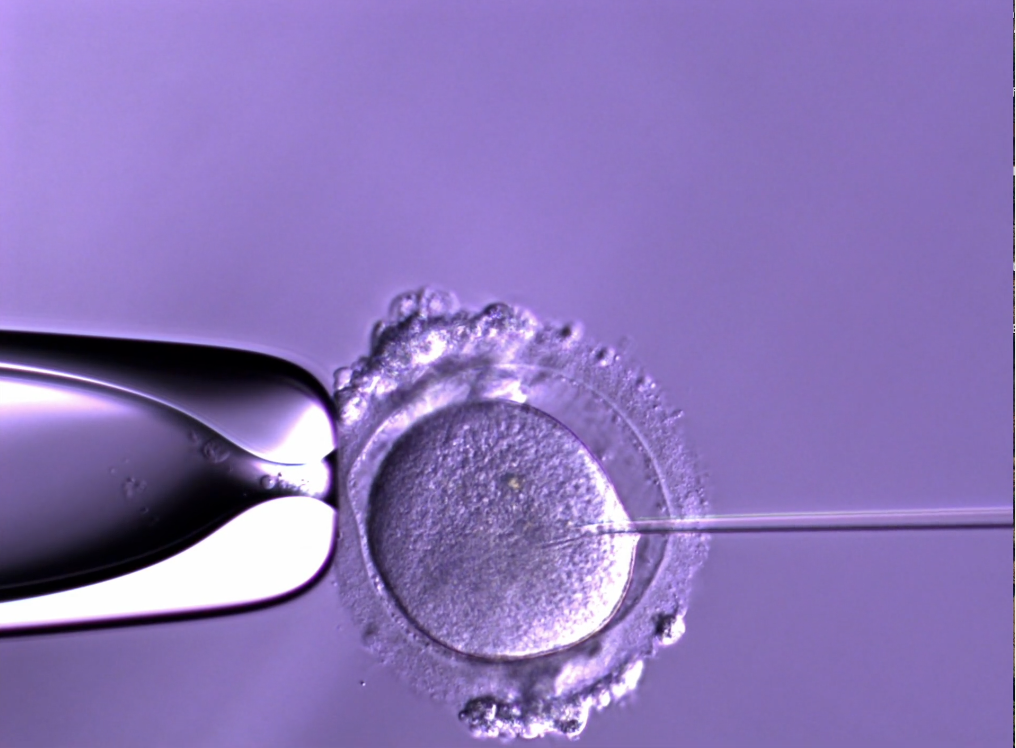
- The Process: The donor eggs are fertilized with your partner’s (or donor) sperm via Intracytoplasmic Sperm Injection (ICSI) to maximize fertilization rates.
- Embryo Culture: Our embryologists grow the embryos for 5–6 days in time-lapse incubators. You can watch their growth via the Ovom App real-time video feed.
Step 3: The Transfer (at our clinic in Cascais, Portugal)
This is your only required travel.
- Timing: You travel to our Cascais clinic for approximately 5 to 6 days.
- The Procedure: A gentle, 10–15 minute procedure to place the best embryo into your uterus. No sedation is required.
- Freezing: Any remaining healthy embryos are vitrified (frozen) for future siblings.
.png)
The Investment: Transparent Pricing
We believe in zero surprises. Our Donor Egg packages are all-inclusive of the donor eggs, ICSI fertilization, and the fresh transfer.
Our Packages and Inclusions:
- Core - €7,550 / £6,795: 6 Donor Eggs, Import Service, ICSI, Fresh Transfer
- Plus - €8,200 / £7,380: 8 Donor Eggs, Import Service, ICSI, Fresh Transfer
- Premium - €9,950 / £8,955: 12 Donor Eggs, Import Service, ICSI, Fresh Transfer
Note: If donor sperm is also required, additional fees apply (~€1,000 per vial + import fee).
See our full price list here: https://www.ovomcare-pricing.com/
FAQ: Common Questions on Egg Donation
Will my baby look like me?
This is the most common emotional hurdle. While the baby will not inherit your DNA, you can select a donor who shares your physical characteristics (eye color, hair color, height, ethnicity). Furthermore, epigenetics means your body influences which of the donor's genes are expressed. You nurture the potential.
What are the success rates for IVF with donor eggs?
Donor egg cycles typically have the highest success rates approximately 50% chance of live birth (Kostoglou et al, 2025). This is because the eggs come from young, healthy donors (typically under 30), bypassing the age-related chromosomal issues that affect older eggs.
Is counseling included?
Patients must have a mandatory Donation Counselling Session (€120) to help you and your partner navigate the emotional, psychological and ethical aspects of this journey, ensuring you feel confident in your decision. This session is required by Portuguese law.
What happens if we have extra embryos?
It is common to have healthy surplus embryos after a donor cycle. You can freeze these for future siblings!
See our pricing page for associated costs (Embryo Freezing of Extra Embryos and the annual fee for cryostorage): https://www.ovomcare-pricing.com/
Can I use my partner’s eggs?
Absolutely. If your partner has ovaries and wishes to provide the eggs for you to carry (Reciprocal IVF), we can facilitate this. It allows both of you to be biologically involved — one as the genetic parent and one as the gestational parent. Note: This is priced differently than a standard donor cycle; please refer to our Reciprocal IVF (ROPA) packages: https://www.ovomcare-pricing.com/
The Next Step
Egg donation could be the next empowering step on your journey to parenthood. If you are ready to explore this path, we are here to walk it with you — with clarity, ethics, and world-class science.
Let’s build your family together. Book a Donor Consultation with us.

Footnotes:
1. Kostoglou K, Michos G, Najdecki R, Tsakiridis I, Tatiana C, Chouliara F, Dagklis TI, Mamopoulos AM, Papanikolaou E. Comparison of Cumulative Live Birth Rates Between Fresh and Vitrified Donor Oocytes. Cureus. 2025 Apr 19;17(4):e82589. doi: 10.7759/cureus.82589. PMID: 40390734; PMCID: PMC12087671.




.jpg)
.png)
%20(1).jpg)





%20(1).jpg)
.png)


